10 Common Interior Design Pitfalls in UAE Properties — and Sustainable Ways to Fix Them
Many UAE interiors struggle under the weight of intense heat, glaring sunlight, and persistent dust. These common design pitfalls don’t just harm aesthetics—they undermine comfort and sustainability. In this guide, you’ll learn how to avoid these mistakes with smart, eco-friendly solutions tailored for the region’s unique challenges. Ready to see how Gravityfz can help you create spaces that perform beautifully and responsibly? Keep reading. [https://www.offthemrkt.com/lifestyle/top-5-interior-design-mistakes-to-avoid-in-dubai-homes]
Sustainable Solutions for Common Pitfalls
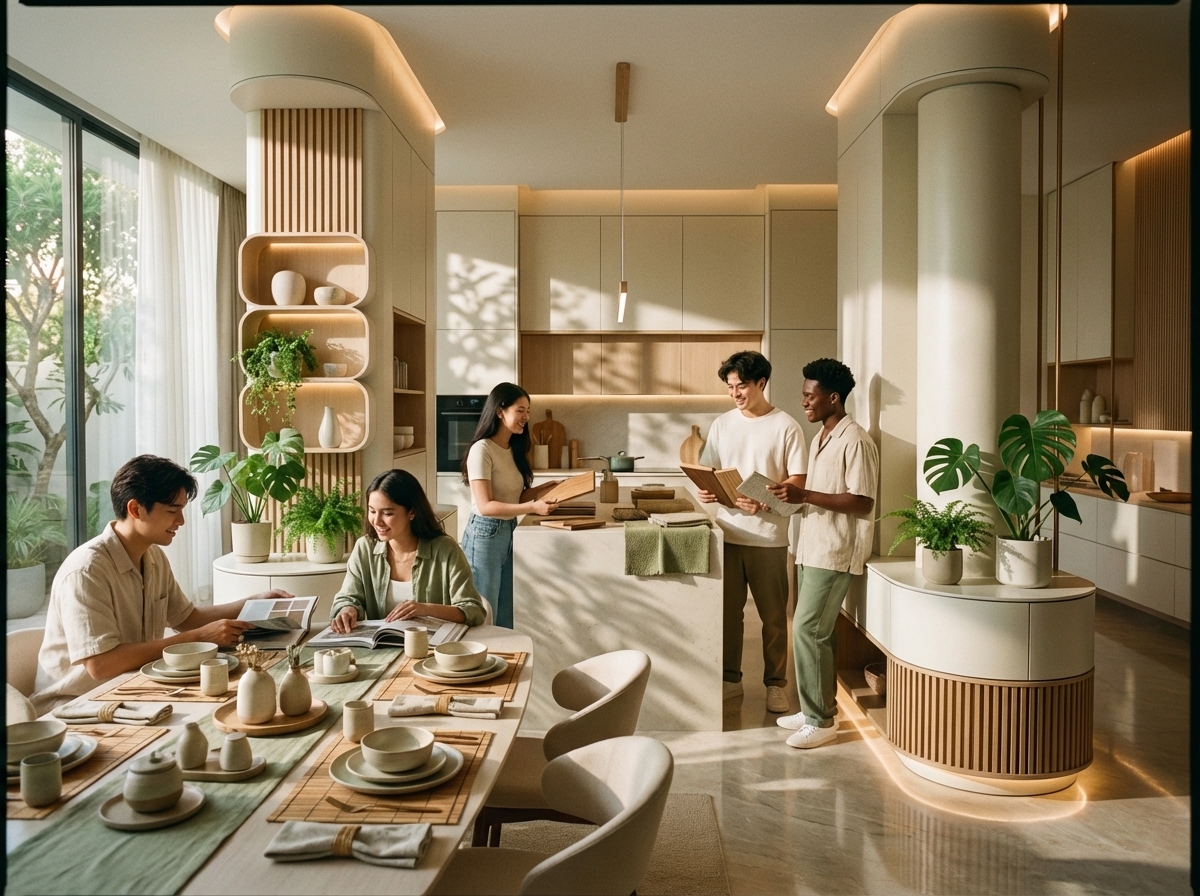
Understanding the challenges of UAE interiors is the first step to overcoming them. Let’s dive into how you can combat these common issues with sustainable, smart strategies.
Excess Solar Gain and Glare
Sunlight is abundant in the UAE, and while it brings warmth, it also brings challenges. Too much sunlight can cause discomfort and damage interiors. To manage this, smart window placements and treatments are key. For example, using high-performance glass can help control solar heat. You might also consider solar shades or reflective films, which reduce glare and heat without blocking views.
Another effective approach is integrating architectural elements, like overhangs or pergolas, which offer shade and reduce direct sunlight. These features not only enhance comfort but also contribute to energy savings. By managing solar gain, you foster a cooler, more sustainable environment.
Underperforming Lighting Plans
Lighting is more than just bulbs and fixtures; it’s about creating mood and functionality. Poor lighting can make spaces feel dull or harsh. Start by assessing natural light levels and complementing them with LED solutions. LEDs are not only energy-efficient but also offer a broad spectrum of warm and cool tones to suit different areas.
Layering is another powerful technique. Combine ambient, task, and accent lighting to ensure every corner is well-lit. Using smart lighting controls allows for customizable settings, enhancing both aesthetics and energy efficiency. By focusing on lighting design, you create a welcoming and versatile space.
Material Failures from Humidity
The UAE’s climate demands materials that withstand humidity and heat. Traditional materials might warp or deteriorate, impacting both safety and appearance. Opt for moisture-resistant options like treated woods or composite materials. These choices provide durability while maintaining style.
Additionally, consider the use of breathable paints and finishes that can resist humidity. This not only protects your surfaces but also contributes to healthier indoor air quality. By investing in the right materials, you ensure longevity and reduce maintenance costs.
Strategic Interior Design for UAE Properties
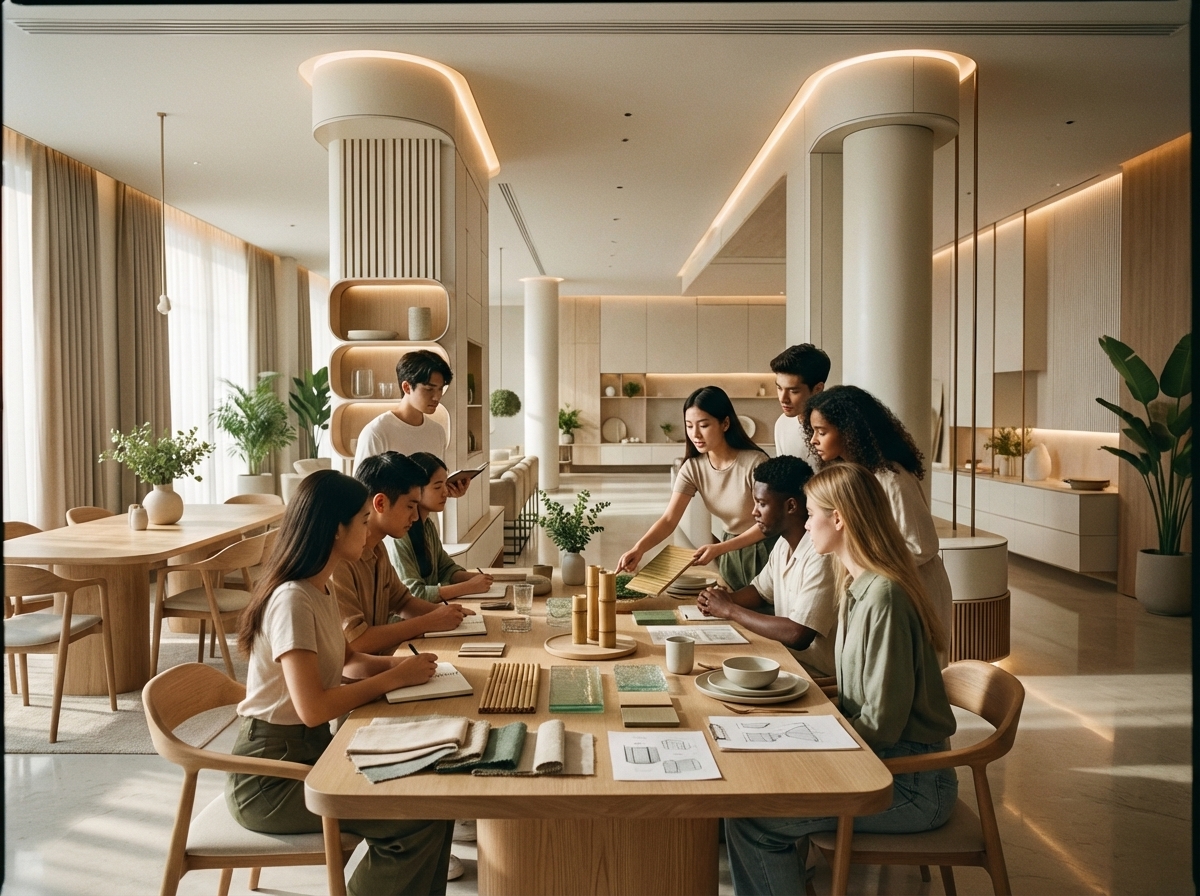
Designing interiors in the UAE requires a balance of creativity and practicality. Let’s explore key strategies to enhance functionality and aesthetics.
Weak Acoustics and Solutions
Sound control is often overlooked, but it’s crucial for comfort. Poor acoustics can lead to echo and noise pollution, especially in open spaces. Start by incorporating acoustic panels or foam tiles that absorb sound. These solutions are effective in offices and homes alike.
Consider soft furnishings like rugs and curtains, which also help in dampening noise. By focusing on acoustics, you create a more serene environment, whether it’s for rest or work. This approach not only enhances comfort but also supports well-being.
Effective Space Planning Techniques
Space planning is about maximizing utility without sacrificing style. Poor layout can make areas feel cramped or disjointed. Begin by identifying key areas of activity and ensure there’s a natural flow between them. Using furniture as dividers can help in creating defined zones without erecting walls.
Consider multipurpose furniture that adapts to different needs. For instance, a fold-away desk can transform a living area into a temporary workspace. These solutions allow for flexibility and optimize space usage.
MEP Coordination Challenges
Mechanical, Electrical, and Plumbing (MEP) systems are the backbone of any building. Poor coordination can lead to inefficiencies and costly repairs. Engaging with an experienced team ensures that these systems work seamlessly together. Coordination is crucial during the design phase to prevent clashes.
Using 3D visualization tools can help in planning and detecting potential issues early on. By investing in proper MEP planning, you ensure a smoother operation and reduce long-term expenses.
Implementing Sustainable Design Practices
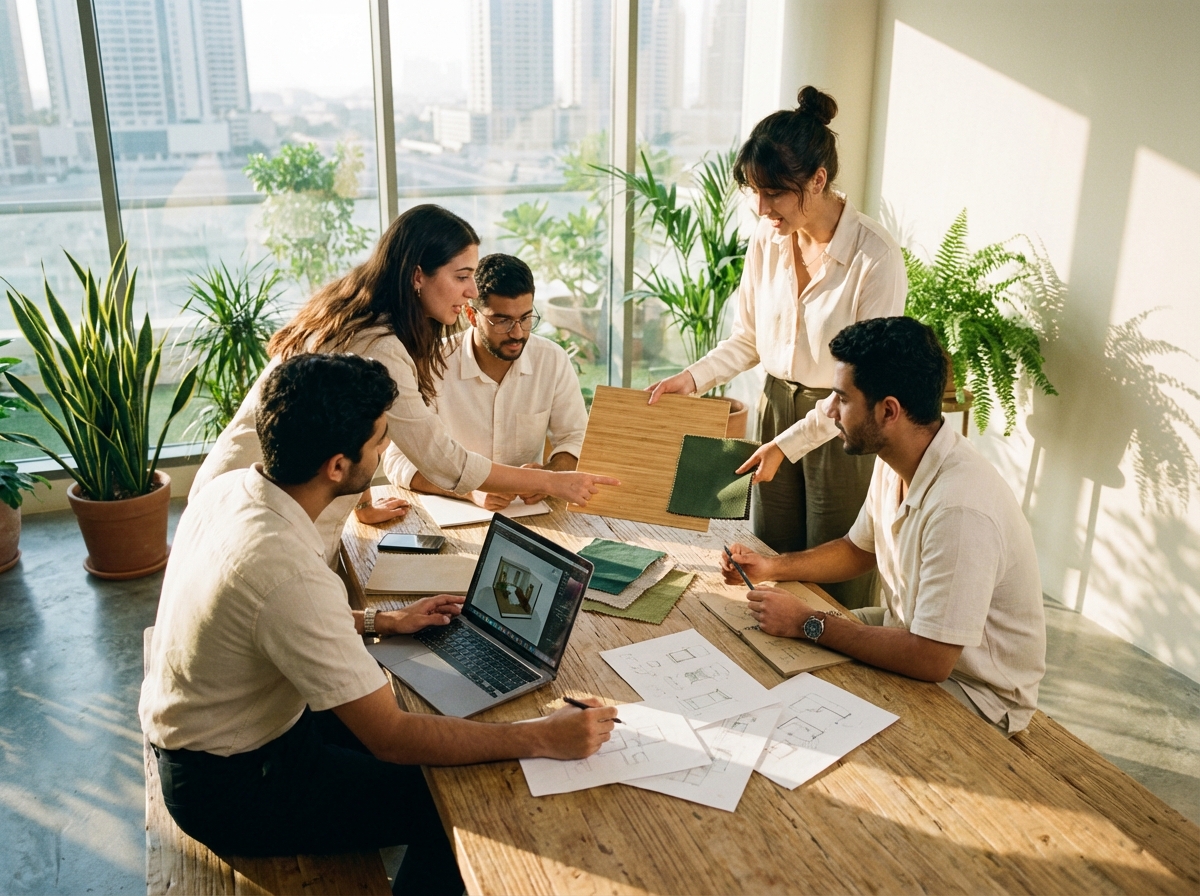
Sustainability is more than a trend; it’s a necessity. Let’s delve into practices that make your interiors eco-friendly and efficient.
Biophilic Design and Shading Strategies
Bringing nature indoors enhances well-being and air quality. Biophilic design incorporates natural elements like plants and water features. These not only beautify spaces but also promote mental health. Introducing green walls or indoor gardens can dramatically transform your environment.
Shading strategies, such as external louvers or vertical gardens, provide natural cooling. These methods reduce heat while adding aesthetic value. By embracing biophilic design, you create a harmonious and refreshing atmosphere.
Eco-Friendly Materials and Finishes
Choosing the right materials is crucial for sustainability. Look for locally sourced and recycled materials. Options like bamboo or cork offer durability and a unique look. For finishes, consider low VOC paints and sealants, which are better for air quality.
By selecting eco-friendly options, you reduce your carbon footprint and promote a healthier living space. These choices reflect a commitment to protecting the environment while still achieving stunning interiors.
Circular Design and Local Sourcing
Circular design focuses on reducing waste and promoting reusability. Opt for furnishings that can be easily repaired or repurposed. This not only extends their lifespan but also supports sustainable practices. Local sourcing minimizes transportation emissions and supports the community.
Implementing a circular approach ensures that your design is both beautiful and responsible. This strategy aligns with global sustainability goals and showcases your commitment to future generations.
In conclusion, by focusing on these strategies, you can transform your space into a sustainable haven. Whether you’re looking at improving solar gain management or embracing circular design, each step contributes to a more eco-friendly and efficient environment. As you implement these changes, you’re not just enhancing aesthetics but also fostering a better future for all.
Explore how tailored sustainable interiors can solve your unique space challenges.