Innovative Sustainable Materials Revolutionizing UAE Interior Design in 2026
Forget everything you know about sustainable materials UAE. The interior design trends of 2026 in the UAE are shifting fast, demanding more than just eco-friendly interiors Dubai can offer. From recycled aluminum UAE to mycelium acoustic panels, these materials blend style, comfort, and measurable sustainability like never before. Ready to see how these innovations can shape your next project? Explore more on how innovative materials are shaping interior design trends of 2026.
Sustainable Materials Transforming UAE Interiors
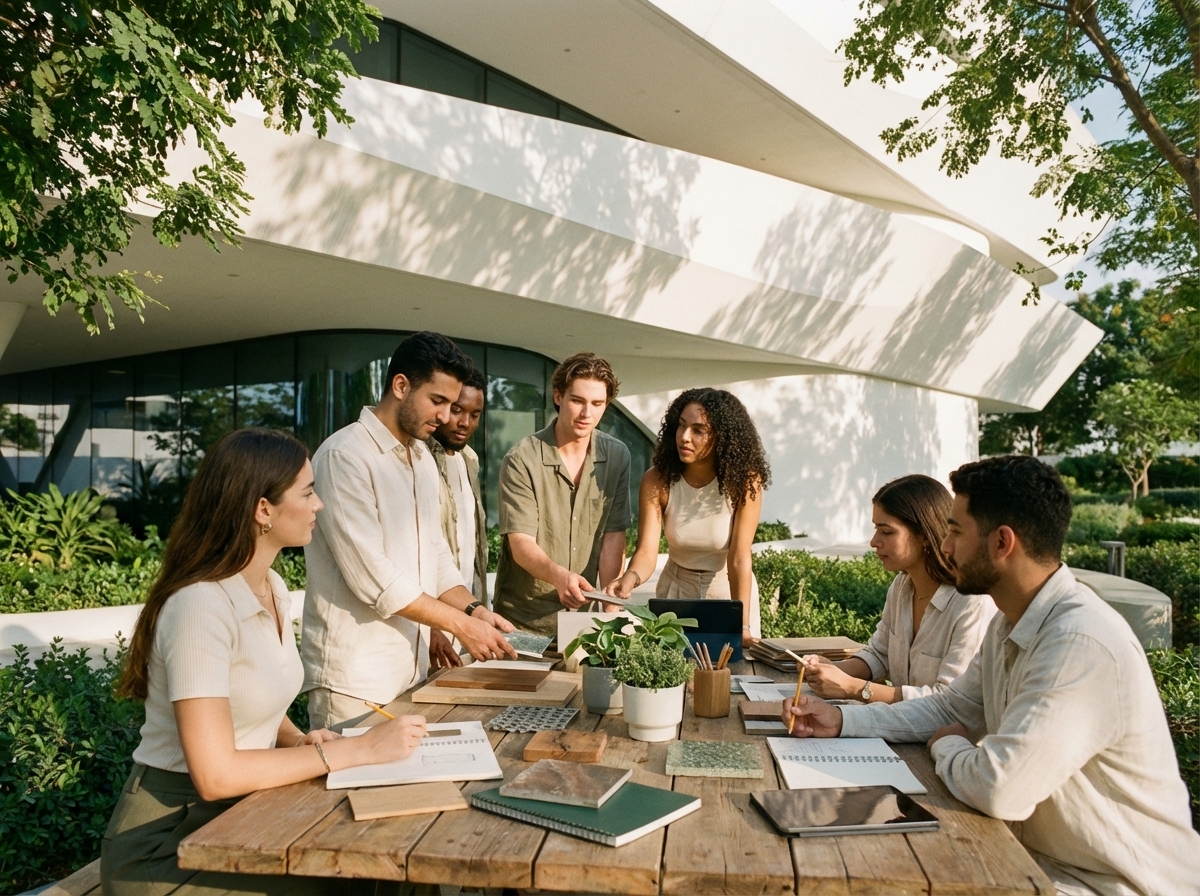
Step into a world where design and sustainability meet. The UAE’s interior scene is buzzing with new materials that promise more than just environmental friendliness. Let’s explore these groundbreaking innovations.
Eco-Friendly Innovations in Dubai
Dubai is leading with materials that redefine style and sustainability. The use of recycled aluminum is a game-changer. It offers durability while reducing waste. Mycelium acoustic panels provide soundproofing with a natural twist, ideal for spaces needing quiet and calm.
Imagine walking into a room where the walls breathe. This is possible with mycelium panels. They are lightweight and perfect for creative designs. On the other hand, recycled aluminum is not just for cans. It’s being used in frames and fixtures, giving a sleek, modern look. Both materials show that eco-friendly doesn’t mean sacrificing style.
Circular Design Strategies for 2026
Circular design is about using resources wisely. It’s not just a trend; it’s the future. By 2026, more designers will focus on materials that can be reused and recycled. This approach reduces waste and promotes sustainability.
Designers are rethinking how spaces are created. Circular design embraces materials that return to the earth or get reused. This strategy is gaining popularity in the UAE, where innovation meets tradition. By choosing materials that last longer and can be repurposed, you’re investing in a greener future. It’s a small change with a big impact.
Low-Carbon Material Options
Cutting carbon emissions is crucial. Low-carbon materials make this achievable. Mineral and clay plasters, for instance, offer a natural finish without the heavy carbon footprint.
Think about the walls in your space. Imagine them covered with plasters that are beautiful and sustainable. These materials are not just kind to the planet; they also contribute to a healthier indoor environment. Opting for low-carbon materials is a statement of responsibility and style.
Cutting-Edge Finishes and Furnishings
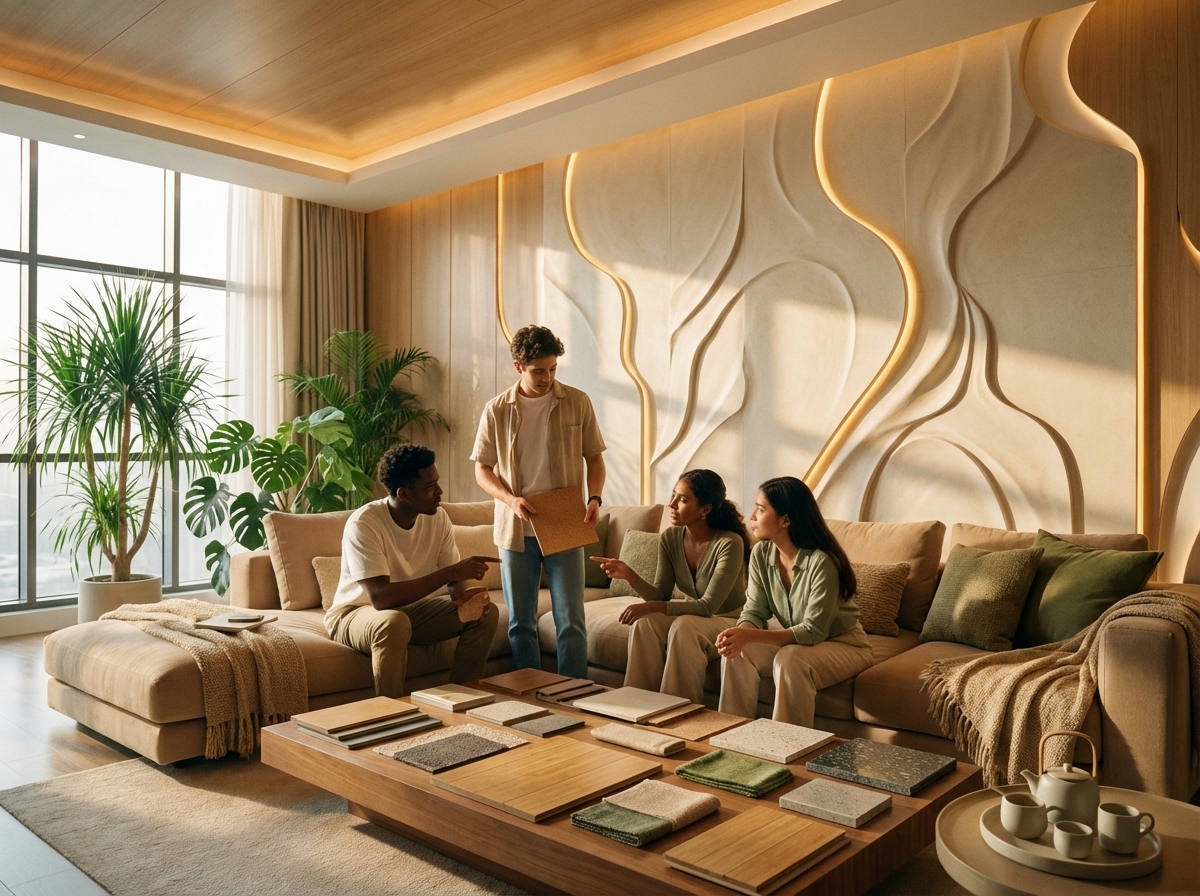
Explore how innovative finishes are changing interiors. From natural fibers to reimagined textures, these materials are at the forefront of design.
Mycelium and Recycled Glass Applications
Mycelium and recycled glass are making headlines. Recycled glass terrazzo offers a stunning, unique look, perfect for countertops and flooring. Its vibrant colors and patterns are eye-catching.
Mycelium is more than just a trend. It’s a sustainable alternative to traditional materials. Lightweight and durable, it’s used in everything from furniture to insulation. Meanwhile, recycled glass brings a fresh perspective to design. Its versatility makes it suitable for various applications. Both materials represent the future of sustainable design.
The Rise of Engineered Bamboo and Cork
Engineered bamboo panels and cork flooring are gaining traction. Bamboo, known for its strength, is perfect for creating stylish, sustainable furniture.
Cork is not just for wine bottles anymore. Its natural resilience makes it ideal for flooring. It’s also a great insulator, keeping spaces warm while reducing energy costs. Bamboo panels are versatile, used in everything from cabinetry to wall coverings. Choosing these materials means embracing the beauty of nature indoors.
Exploring Sintered Stone and Paper Composites
Sintered stone and paper composite surfaces offer durability with style. Sintered stone is strong and scratch-resistant, ideal for high-traffic areas.
Paper composites are lightweight and eco-friendly. Perfect for countertops, they offer a unique texture and aesthetic. These materials prove that sustainability can be both practical and beautiful. By integrating them into your space, you’re not just making a design choice; you’re supporting a sustainable future.
Meeting Compliance and Visualization Needs
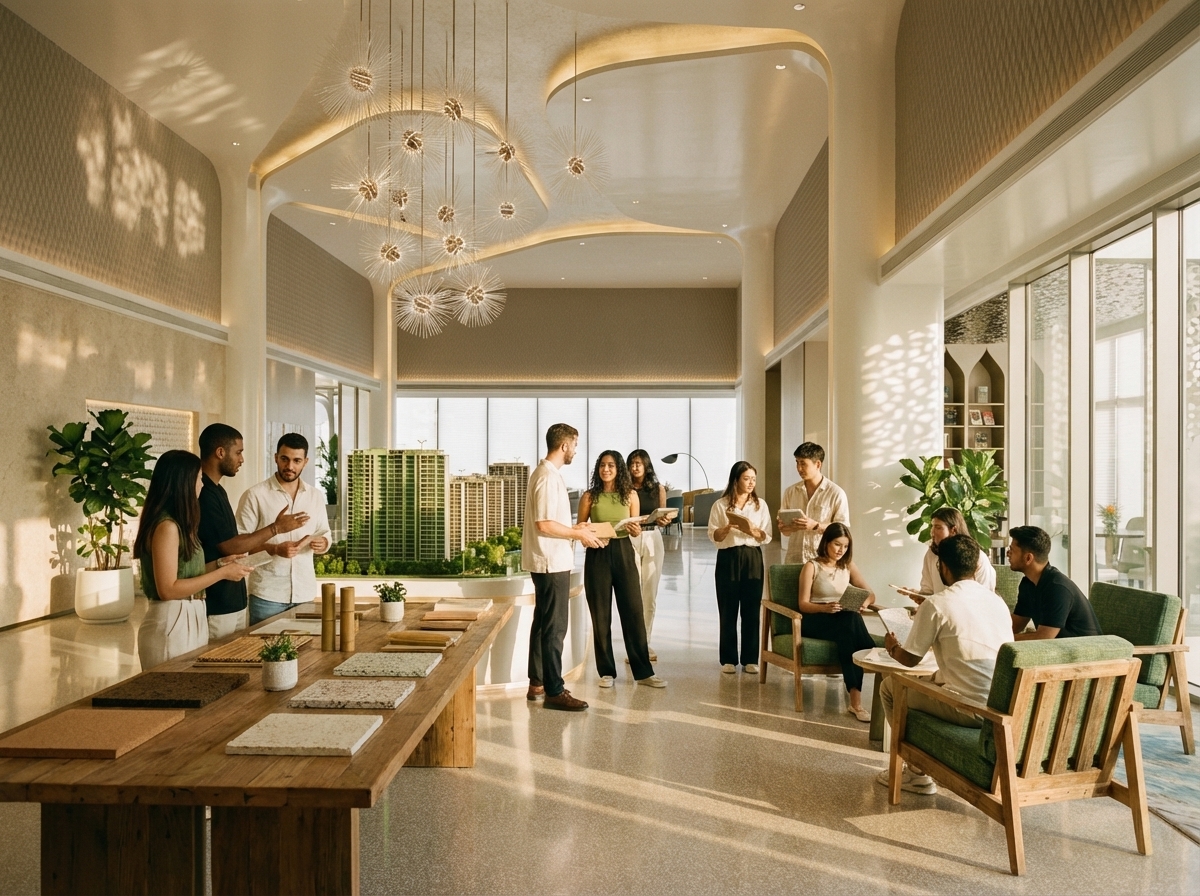
Navigating the landscape of compliance can be daunting. However, with the right tools and techniques, it becomes manageable.
Navigating LEED and WELL Standards
Understanding standards like LEED v4.1 and WELL is crucial for modern designs. These standards ensure buildings are healthy and sustainable.
LEED and WELL certifications are more than just labels. They represent a commitment to environmental responsibility. Achieving these certifications involves using materials that promote energy efficiency and well-being. It’s a comprehensive approach to creating spaces that benefit people and the planet.
Advanced 3D Visualization Techniques
Visualization is key in modern design. 3D material visualization allows you to see how different elements work together before implementation.
This technology provides a realistic preview of your space. It helps in making informed decisions and ensures every detail aligns with your vision. By using advanced visualization, you can create spaces that are both functional and aesthetically pleasing.
Comprehensive EPD and HPD Documentation
Using the right materials involves understanding their impacts. EPD and HPD documentation provides detailed insights into material sustainability.
These documents are essential for verifying the eco-friendliness of your choices. They offer transparency and help in meeting compliance standards. By focusing on documentation, you ensure your projects are both sustainable and responsible.
The UAE is at the forefront of sustainable interior design. By embracing these materials and strategies, you’re not just keeping up with trends; you’re setting them. Engage with innovative solutions that promise a brighter, greener future.
Explore how tailored sustainable interiors can solve your unique space challenges.