Office Space Calculator: Right-Size Your UAE Workplace for People, Performance, and Planet
Use a precise office space calculator to optimize UAE workplaces by aligning space with headcount, activities, and sustainability, incorporating ergonomic design, flexible layouts, and 3D visualization.

Most office space calculations still rely on outdated rules of thumb that leave companies with wasted square footage or cramped desks. Your UAE workspace deserves a smarter approach calibrated to headcount, activity types, and office density trends. Using a precise office space calculator, you’ll align your footprint with real needs, balancing comfort, collaboration, and sustainability. Ready to see how tailored planning unlocks your office’s full potential? Explore your options here.
Understanding the Office Space Calculator
An office space calculator helps you determine the exact space your business needs. This tool ensures you don’t waste money on unused areas or, worse, end up with a cramped environment. Let’s explore how it works.
Calculating Workspace Needs
Finding the right workspace size starts with assessing your needs. Consider the number of employees and their roles. For instance, a team of 50 might require different spaces than a team of 20. Think about the nature of work too. Creative tasks often need more room for brainstorming and collaboration. Tools like the SquareFoot office space calculator can help you get started.
Proven Planning Ratios
Using proven ratios ensures you’re allocating enough space for each function. Typically, you might plan for 150-200 sq ft per employee. This figure includes workstations and common areas. But remember, these are just starting points. Adjust based on your team’s unique needs. For further insights, check out the LoopNet office space calculator.
Activity-Based Metrics Explained
Activity-based working means designing spaces around specific tasks. This approach creates areas for focused work, collaboration, and relaxation. By understanding what activities occur in your office, you can allocate space more efficiently. This ensures every square foot serves a purpose. For a deeper dive into activity-based metrics, Uniland’s space calculator is a helpful resource.
Sustainable and Ergonomic Design

Once you’ve calculated your workspace needs, focus on sustainable and ergonomic design. These elements improve employee well-being and reduce environmental impact.
Importance of Ergonomic Office Furniture
Ergonomic furniture is crucial for employee health. It reduces strain and increases comfort. Consider adjustable desks and chairs that support posture. These investments pay off in productivity and fewer health issues. Most people think any chair will do, but ergonomic choices make a significant difference.
Integrating Sustainable Materials
Choosing sustainable materials is vital. Opt for recycled or renewable resources like bamboo or reclaimed wood. These materials not only look great but also support eco-friendly practices. Sustainability isn’t just a trend; it’s a necessity for the planet’s future.
Dubai Interior Design Trends
Dubai’s interior design trends are evolving. There’s a shift towards open, airy spaces with lots of natural light. Incorporating green walls and biophilic elements is also popular. These trends not only enhance aesthetics but also contribute to healthier work environments. For more design insights, consider reading our post on modular, sustainable work pods.
Planning for Future Workspaces
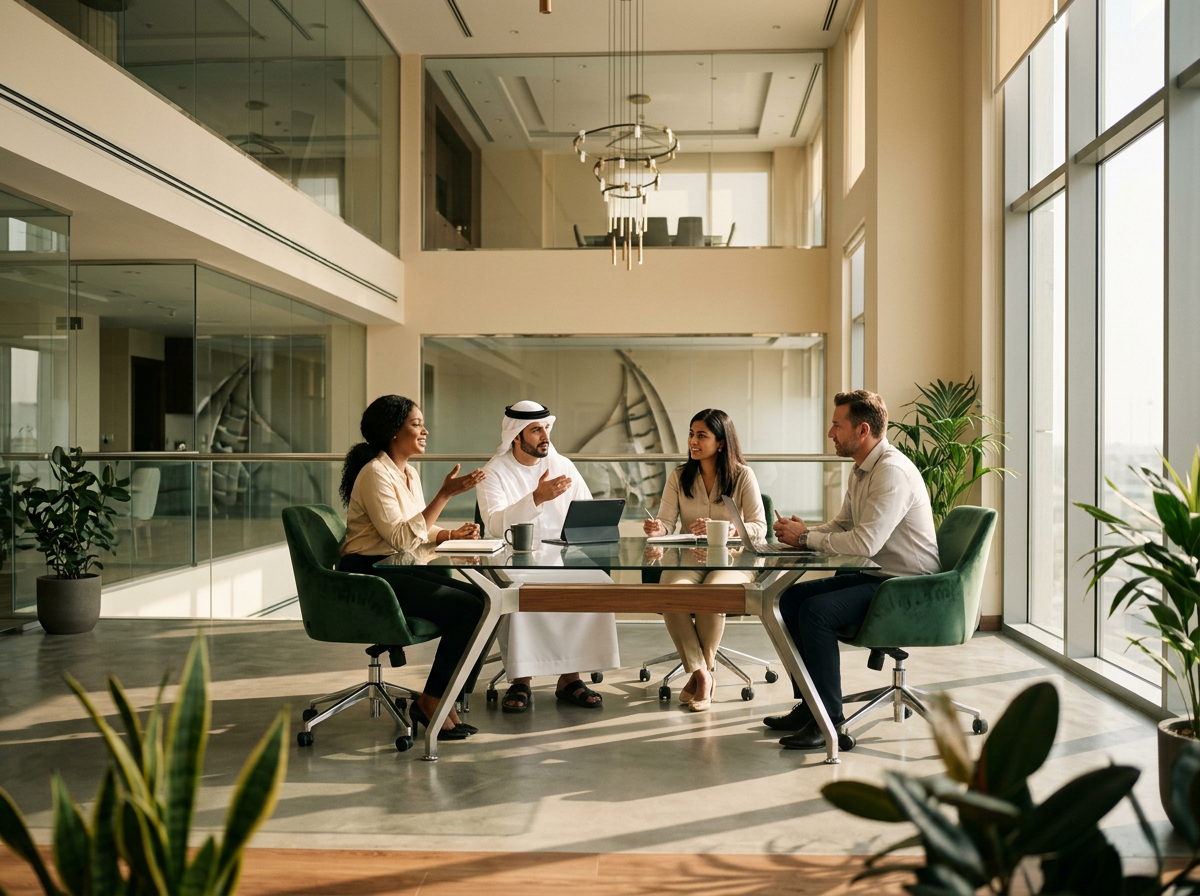
Future workspaces need to be adaptable. They should cater to diverse work styles and foster collaboration.
Open Plan vs Private Office
Open-plan offices encourage collaboration but may hinder concentration. Private offices offer focus but can isolate employees. The best approach is a blend. Create zones that offer both open spaces and quiet rooms. This flexibility supports different work modes.
Collaboration Spaces and Hot Desking Ratios
Collaboration spaces are essential for team interaction. Ensure there’s enough room to accommodate group activities. Hot desking, where employees are not assigned specific desks, can save space. However, balance is key. Too much hot desking can lead to a lack of personal space.
3D Visualization in Office Design
3D visualization helps you see the future layout before making changes. It allows for better planning and fewer surprises. With 3D models, you can experiment with different layouts and designs, ensuring the final result meets your expectations. For a comprehensive guide, our article on office space planning offers valuable insights.
By understanding and applying these principles, you can create a workspace that meets your needs today and adapts for tomorrow. Prioritize sustainability and employee well-being in your designs, and you’ll foster a productive and happy environment.
Light up your space with exclusive summer offers—create stunning vibes all season.