Biophilic Design That Works: Light, Texture, and Greenery in Real Spaces
Biophilic design integrates natural light, textures, and greenery into spaces to enhance well-being, comfort, and productivity in homes, hotels, and workplaces by fostering a nature-connected environment.
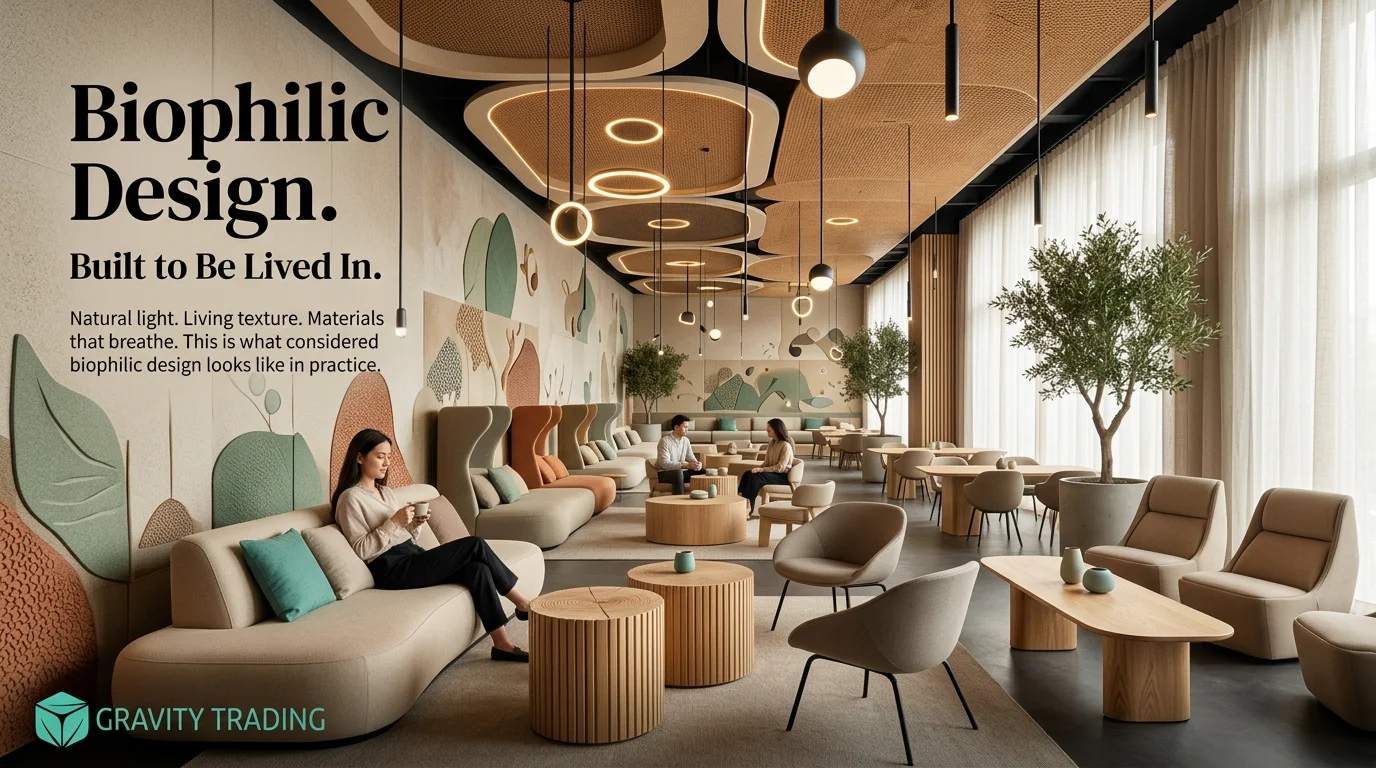
Forget what you think biophilic design looks like. At Gravityfz, it’s not about adding plants or pretty pictures—it’s about weaving natural light, texture, and greenery into how a space lives and breathes every day. The best biophilic design examples make homes, hotels, and workplaces feel grounded and inviting while supporting real-life needs. Ready to see how subtle shifts can create calm, current spaces that perform beautifully?
For more information, visit Gravityfz.
Introduction to Biophilic Design
Reframing Biophilic Concepts
Biophilic design challenges traditional ideas about interior spaces. It’s not just about decorative elements. It’s about how natural features change the way a room feels and functions. Imagine walking into a space where nature isn’t an afterthought but a core part of the design.
Everyday Livable Spaces
Think of your living space. Wouldn’t it be better if it felt calmer and more inviting? Biophilic design aims to create spaces that enhance your daily life. It’s about making rooms that support well-being through thoughtful use of natural elements.
Biophilic Design Examples
Concrete examples show the true power of biophilic design. Consider a home that uses natural light to brighten every corner or a hotel lobby with a living wall that brings the outdoors in. These examples aren’t just beautiful; they change how spaces are used.
Key Elements of Biophilic Design
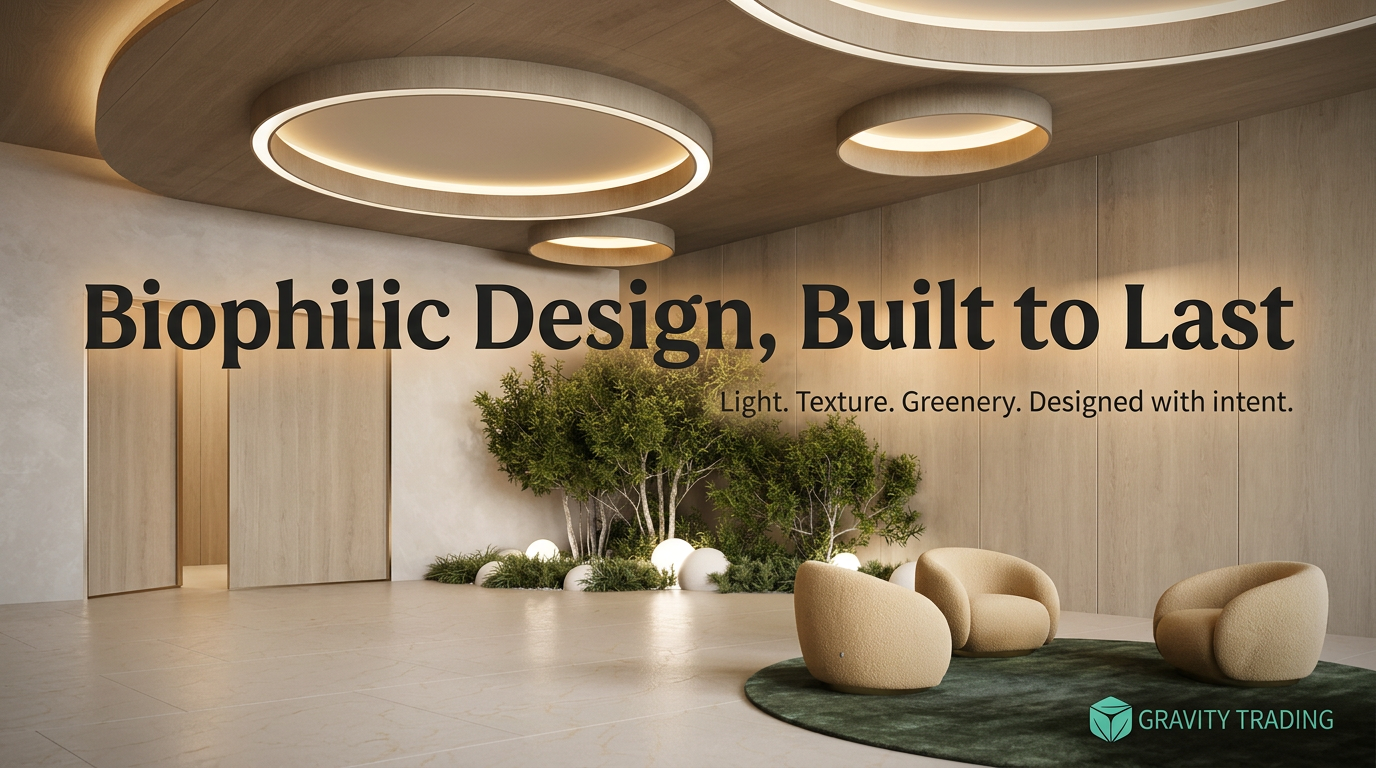
Harnessing Natural Light
Natural light is a game-changer in design. It transforms spaces, making them feel more open and alive. It’s not just about brightness; natural light affects mood and energy levels, creating a healthier environment.
Texture and Material Choices
Materials play a huge role in biophilic design. Think of textured stone and wood. These materials add warmth and character, making spaces feel grounded. They also provide a connection to nature that’s both visible and tactile.
Integrating Greenery
Greenery isn’t just decor; it’s essential. Plants improve air quality and introduce calming elements into a space. Whether it’s a small potted plant or a full living wall, greenery brings life into any interior.
Real-World Applications
Residential Biophilic Interiors
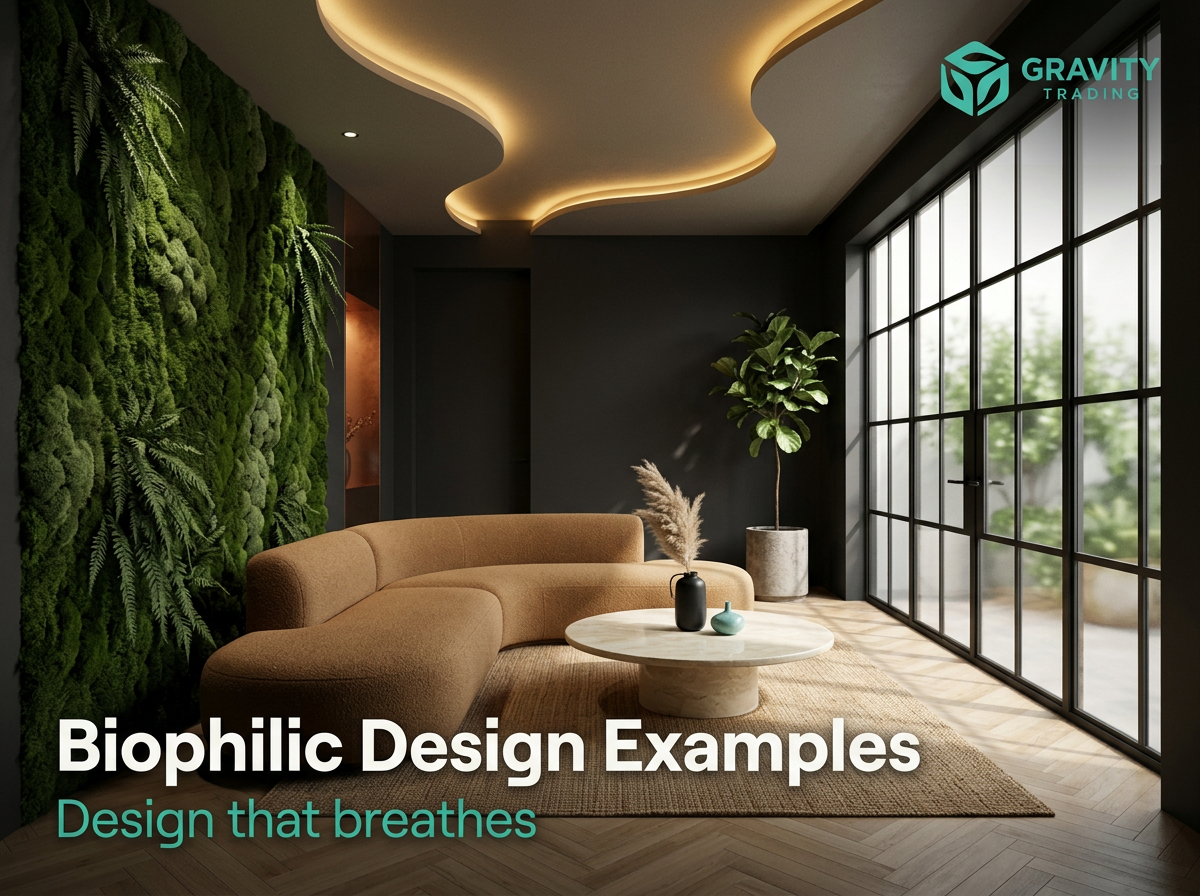
In homes, biophilic design improves comfort and aesthetics. A home designed with natural materials and plenty of light feels more welcoming. It’s about creating a space that supports your lifestyle, making everyday activities more pleasant.
Hospitality Design in the UAE
Hotels in the UAE are embracing biophilic design to enhance guest experiences. Imagine a hotel lobby with natural textures and abundant greenery. These elements create an oasis-like atmosphere, offering a refreshing escape from the outside world.
Workplace Wellness Design
Biophilic design in offices boosts productivity and well-being. Natural light and plants can reduce stress and increase focus. A well-designed workplace isn’t just about aesthetics; it’s about creating an environment where employees thrive.
Frequently Asked Questions
What is biophilic design?
Biophilic design focuses on incorporating natural elements like light, plants, and materials into interiors to enhance well-being and connection to nature.
How does biophilic design benefit workplaces?
Biophilic design in workplaces can improve productivity and reduce stress by creating environments that are more comfortable and engaging.
Can biophilic design be applied in small spaces?
Yes, biophilic design can be adapted for any space size. Even small areas can benefit from natural light and greenery to create a more inviting atmosphere.